
Welcome to this update from New World Same Humans, a newsletter on trends, technology, and society by David Mattin.
If you’re reading this and haven’t yet subscribed, join 30,000+ curious souls on a journey to build a better future 🚀🔮
Last year I began a series of Postcards from the New World, which I know proved popular with many readers. They’ve been on a pause for a while, but this instalment marks their reintroduction. Expect a postcard in your inbox every Sunday from now on.
Here’s the question underneath all the anxiety about AI and its implications for us: what is a human being for?
If the deepest point of human beings is to be good at maths and science, then soon there will be no point of us. If the point is to be efficient creators of economic value, likewise. If our existence is about being smart or knowing things, likewise. If any of that is the end-goal point of being human, then soon we may as well hand over to the machines wholesale.
Under that view of the human, we are defunct. Our time is over.
In the end, almost no one believes that. Even people who claim they do would find, if they looked deeper inside themselves, that they don’t.
So what is special about us? Why are we humans worth saving?
I keep coming back to a simple but arresting truth: a machine can never be a human being. It can be smarter than us. A more efficient economic actor. More productive. It can eat pretty much every domain of intellectual activity. But the one thing it can’t do? It can never participate in the unique, peculiarly human way of seeing the world that is ours.
We are part of a community of language bearers who make reference to a uniquely human kind of subjective experience. Our personhood is entangled with that community of shared meaning. That is to say: we are human persons because of and through our immersion in a community of other humans who see us as such.
The specifically human way of seeing: that’s what is unique about us. That, alone, is what can never be colonised by other beings. That is what we must lean into.
Once we understand this, truly understand it, the implications are vast. We come to understand that if we try to train ourselves to compete with intelligent machines, or even to be only optimised users of them, we are playing the wrong game. We are setting out on a highway towards human obsolescence. Across any domain of intellectual activity that can be made legible to a machine, we simply will not be able to compete with superintelligence.
We must cultivate something else. And that starts with coming to understand that our deepest value comes not via knowing stuff, or being smart, but via membership of a community that shares a unique — and so uniquely precious — way of seeing.
Yes, intelligent machines will soon supersede us in a whole range of ways. But we are still the creatures who created, and listen to, the Brandenburg Concertos. Who read Shakespeare. Who marvel at nature. Who can say to one another: I know how you feel.
Perhaps in time, and via the new machine lifeforms we seem to be creating now, the world in which all that happens may indeed pass into history. But we don’t have to embrace that outcome, or hasten it. We can fight for the human way of seeing. And if we fight, I think we’ll find a way through.
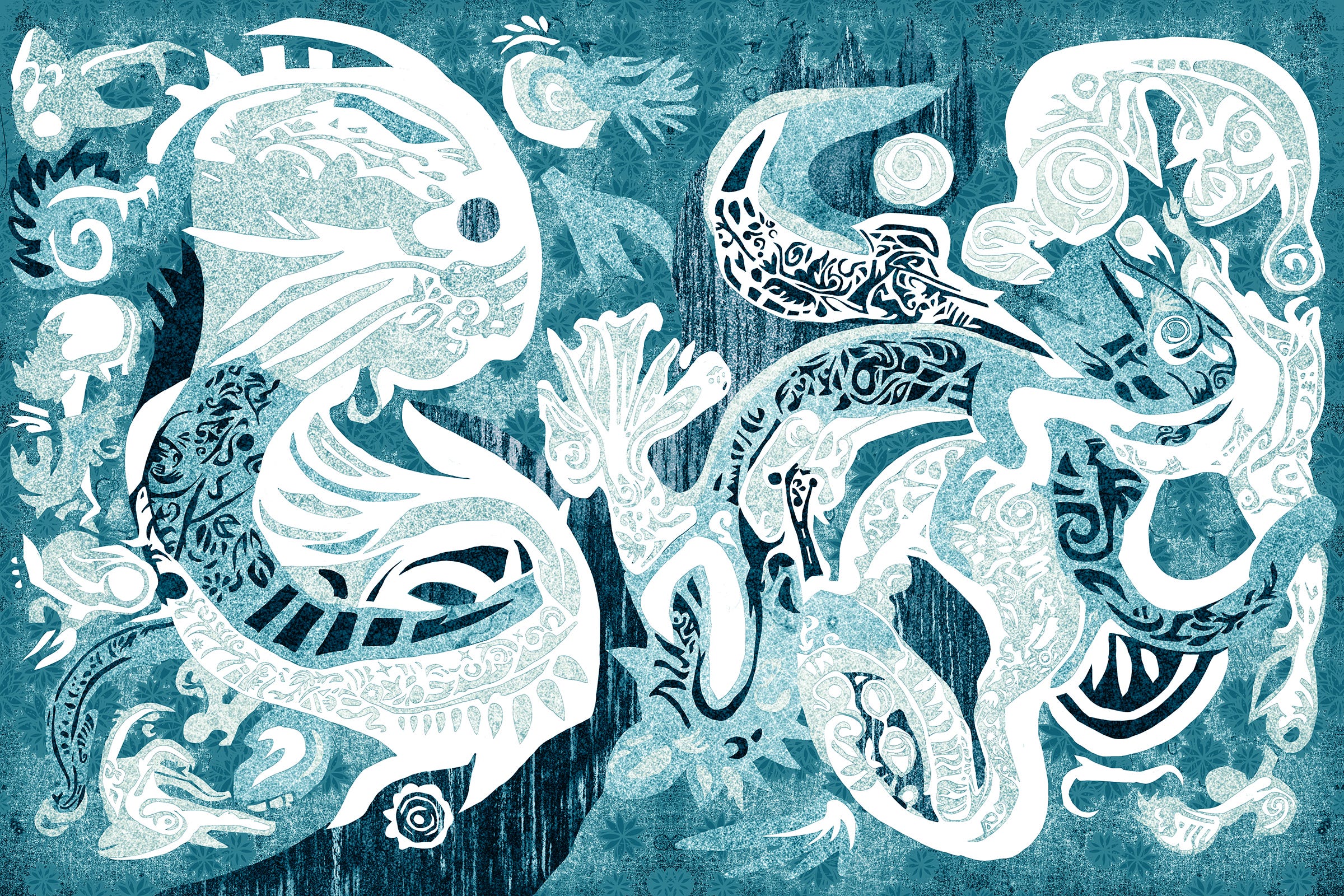
This was #18 in the series Postcards from the New World, from NWSH. The title artwork is Crescent Blue (2023) by the American generative artist Emily Xie.
AI can never replace critical thinking-pattern recognition & creativity
I fully agree that being willing and able to say to another person: 'I know how you feel' is a powerful expression of our uniqueness as human beings. This makes me wonder if we are equally willing and able to say the same thing to ourselves. Admitting truthfully that 'I know how I feel' is a powerful declaration of independence. From there, we can better reach out to others to build a compassionate community.